Best Rhinoplasty Surgeon in Colombia How US Patients Should Actually Choose

$60 USD · 45–50 minute video consultation · English-speaking team

Choosing the best rhinoplasty surgeon in Colombia — seven criteria US patients should verify, with Dr. Daniela Correa, plastic surgeon in Medellín
Choosing a rhinoplasty surgeon in Colombia · Seven criteria worth verifying
Dr. Daniela Correa, plastic surgeon in Medellín
Article written by

Dr. Daniela Correa

Plastic, Aesthetic and Reconstructive Surgeon

Specialist in breast surgery, body contouring, and aesthetic procedures with a focus on natural, safe and harmonious results.

Practicing in Medellín and Rionegro, Colombia.

THE SHORT ANSWER

The “best” rhinoplasty surgeon in Colombia for a US patient isn’t the most-Googled name. It’s the surgeon whose credentials, technique, and patient infrastructure match what you specifically need. This guide walks through seven things to verify before you book a flight — and shows you how to verify each one independently.

When you Google “best rhinoplasty surgeon in Colombia,” you get listicles — ranked, scored, and almost never methodology-transparent. For a US patient considering surgery 1,500 miles from home, that’s the wrong tool to make the decision.

The real risk isn’t ending up with the second-best surgeon on a ranked list. It’s ending up with a surgeon whose credentials look impressive on a website but don’t hold up against an independent verification check — and only finding out after the surgery is already done, or after a complication you can’t fix without returning to Colombia.

This guide does something different. It lists seven criteria that international rhinoplasty patients should verify, shows you the public databases where you can verify each one yourself, and at the end shows transparently how Dr. Daniela Correa stacks up against the same checklist. You can run any other surgeon through the same checks.

A checklist, not a ranking

Below are seven criteria worth verifying before you commit to any rhinoplasty surgeon in Colombia — credentials, operating facility, technique transparency, portfolio depth, international-patient infrastructure, red flags, and a transparent self-assessment you can apply to any surgeon you’re evaluating.

The credentials that actually matter (skip “certified” without context)

In Colombia, “plastic surgeon” is a regulated title — but verification requires more than a website badge. Three things to confirm independently:

SCCP full membership

The Sociedad Colombiana de Cirugía Plástica Estética y Reconstructiva (SCCP) is the national society for board-certified plastic surgeons. Full membership (miembro de número) requires a completed plastic surgery residency from a recognized program, sponsorship by three full members, a scientific paper, and approval by the credentials and ethics committee. You can verify a surgeon’s membership at cirugiaplastica.org.co using their members directory (search by name).

⚠ Watch out for similar-sounding societies

Colombia has several “sociedades de cirugía estética” that do not require a completed plastic surgery residency. They are not equivalent to SCCP. If a surgeon’s only credential is “miembro de [society],” ask which society, and check that society’s membership requirements directly.

ReTHUS registry (Ministerio de Salud)

Every healthcare professional licensed to practice in Colombia is listed in the public Registro Único Nacional del Talento Humano en Salud (ReTHUS). You can verify any surgeon’s registration at web.sispro.gov.co/THS using name and document number.

Anesthesiologist credentials

Your surgery will involve a separate anesthesiologist. In Colombia, the national society is SCARE (Sociedad Colombiana de Anestesiología y Reanimación), the WFSA-affiliated reference body — not a board in the US sense, but the standard credentialing reference. Combined with ReTHUS verification, you can confirm your anesthesiologist independently.

Where they operate — facility-level signals

Surgeon credentials matter. So does the operating room.

JCI accreditation at the facility level

Joint Commission International is the global accreditation body that audits hospitals and clinics against patient-safety, infection-control, and clinical-quality standards reviewed on-site — the same body that audits leading US medical centers. In Colombia, several general hospitals carry JCI accreditation. IQ InterQuirófanos in Medellín is the only JCI-accredited clinic in Colombia dedicated exclusively to plastic surgery — meaning every operating room, protocol, and staff member is oriented around plastic surgical procedures specifically, not general medical care.

For an international rhinoplasty patient, the practical difference is operational density: a facility doing many rhinoplasties a month has different infection-control rhythms than a general hospital where plastic surgery is one of dozens of services.

⚠ Red flag: office-based surgery

Some plastic surgeons in Colombia operate out of unaccredited office settings, not hospitals or accredited surgical clinics. There is no JCI body to audit the operating room because there is no operating room — only a procedure room. For rhinoplasty under general anesthesia, this should disqualify the surgeon for a US patient who has no easy way to manage a serious complication.

Where Dr. Daniela consults and operates

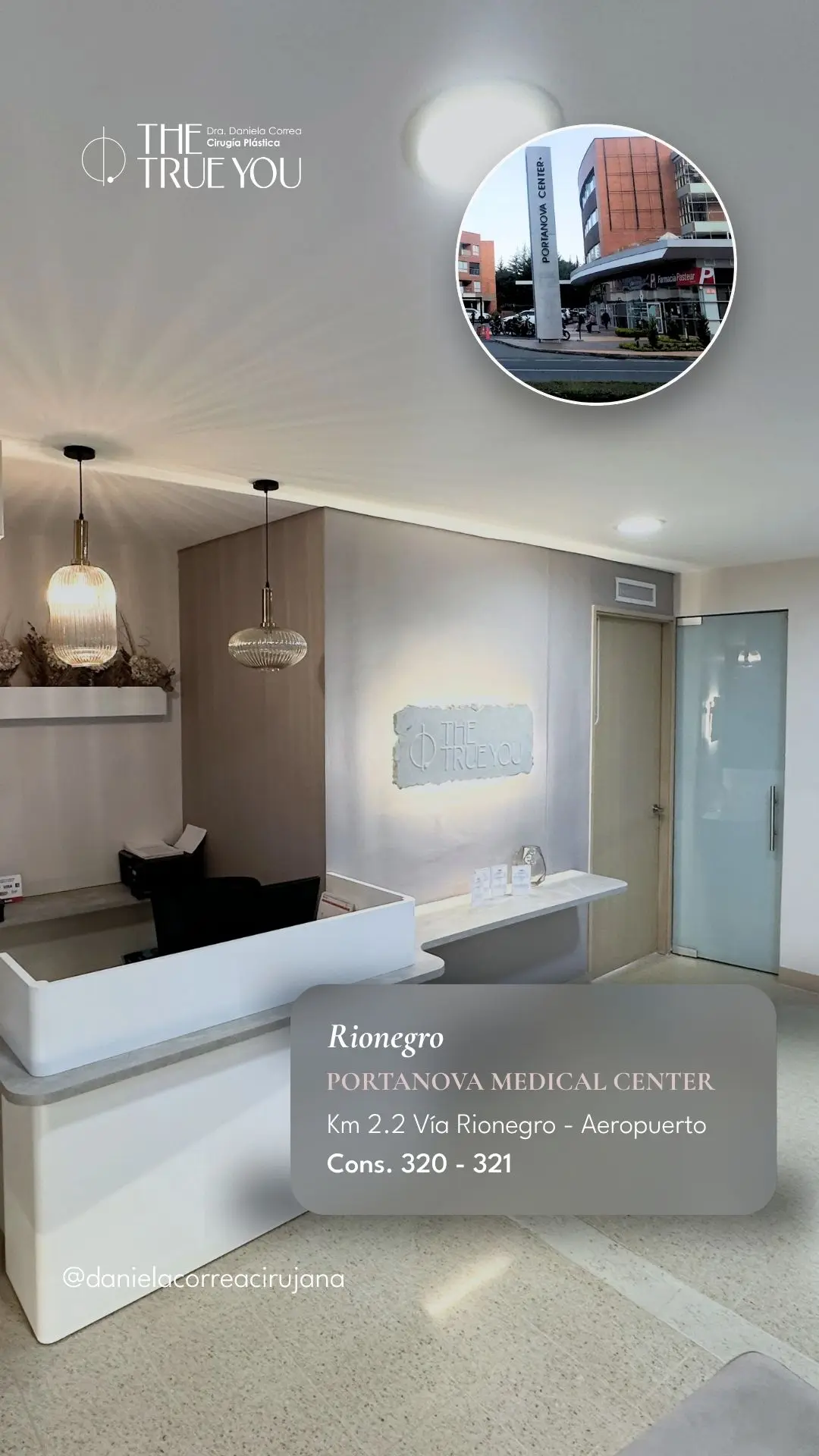
Transparency about facilities is part of the checklist. These are the actual rooms where Dr. Daniela Correa sees international patients and the JCI-accredited clinic where the surgery takes place.
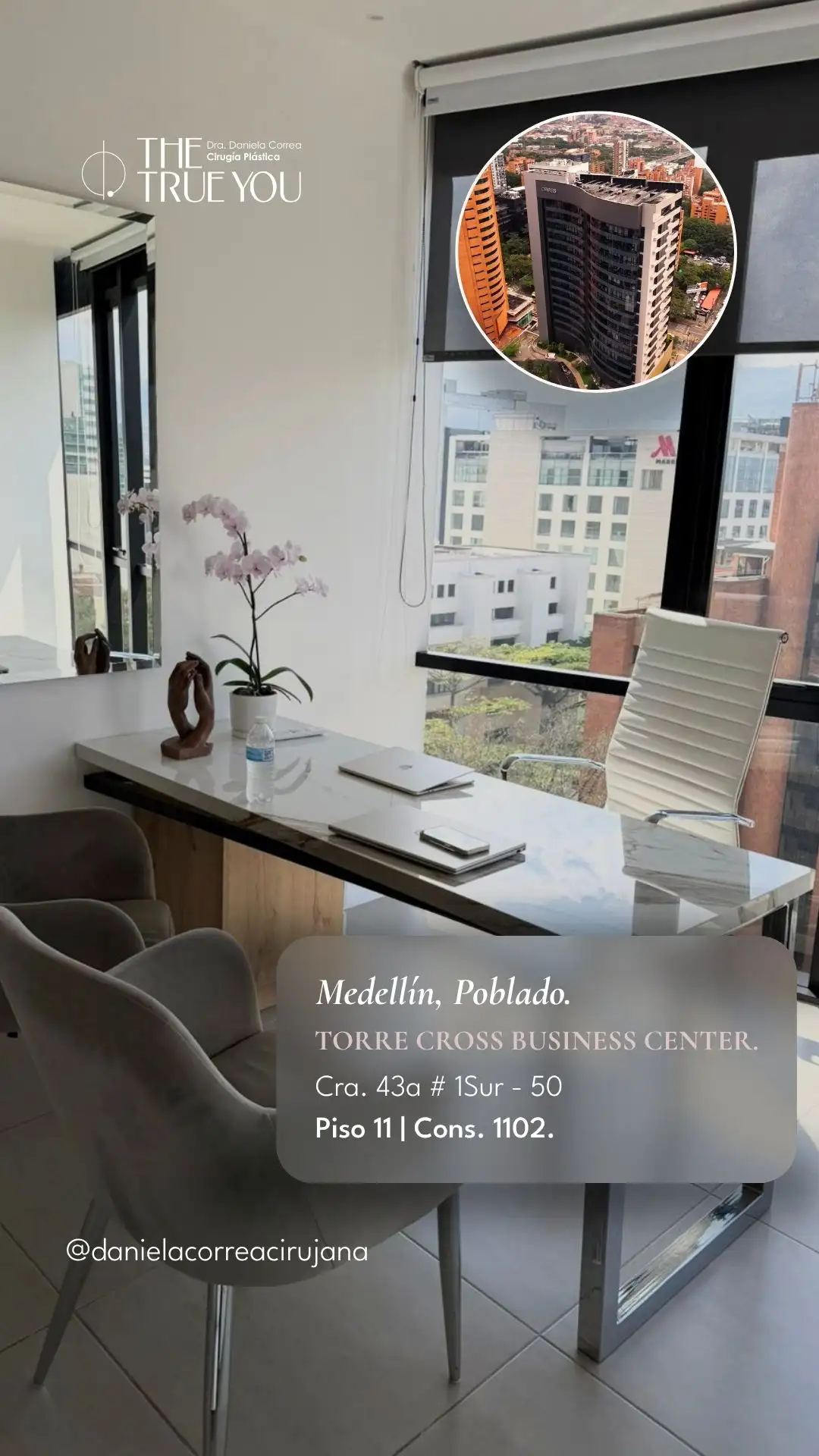
Dr. Daniela Correa consulting room in Medellín, El Poblado — Torre Cross Business Center
Consulting room · Medellín (El Poblado) — Torre Cross Business Center
Dr. Daniela Correa consulting room in Rionegro — Portanova Medical Center
Consulting room · Rionegro — Portanova Medical Center
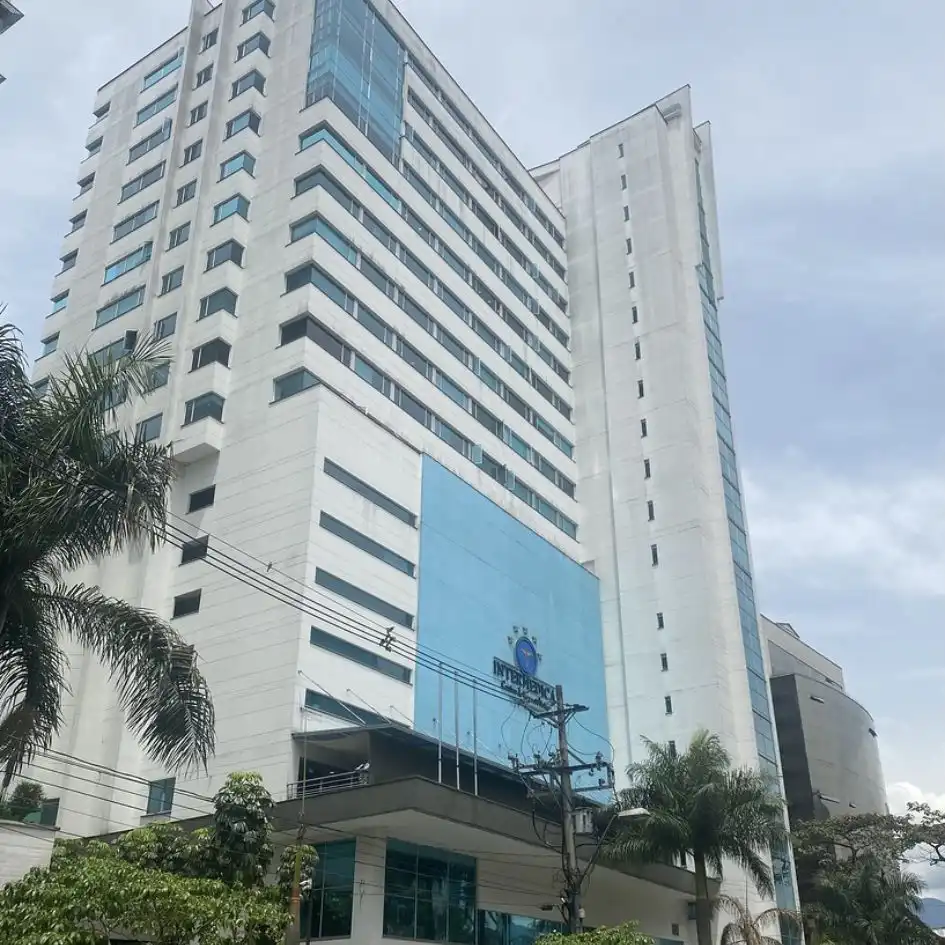
IQ InterQuirófanos, the JCI-accredited plastic surgery clinic in Medellín where Dr. Daniela Correa operates
IQ InterQuirófanos · JCI-accredited surgical facility where Dr. Daniela operates

NEXT STEP

Run Dr. Daniela through the credentials checklist on screen

During your 45–50 minute virtual consultation, Daniela will share her SCCP membership, ReTHUS registration, anesthesiologist credentials, and the IQ InterQuirófanos JCI accreditation — directly on screen, with verifiable references. If anything doesn’t check out, you’ll know in 45 minutes.

Book your virtual consultation — $60 USD →

45–50 min · Documents on screen · Same-day notes

Technique transparency (open vs closed, ultrasonic vs traditional)

A surgeon who can’t explain which technique they’ll use and why is a surgeon who hasn’t planned your surgery.

Open vs closed approach

Open rhinoplasty makes a small external incision on the columella (the strip between the nostrils) for full visibility of the underlying structure. Closed rhinoplasty works through incisions inside the nostrils only. Both are valid — the choice depends on your anatomy, the changes needed, and the surgeon’s training. Best practice is for the surgeon to disclose which approach is planned before you commit, and explain why.

Ultrasonic (Piezotome) vs traditional osteotomes

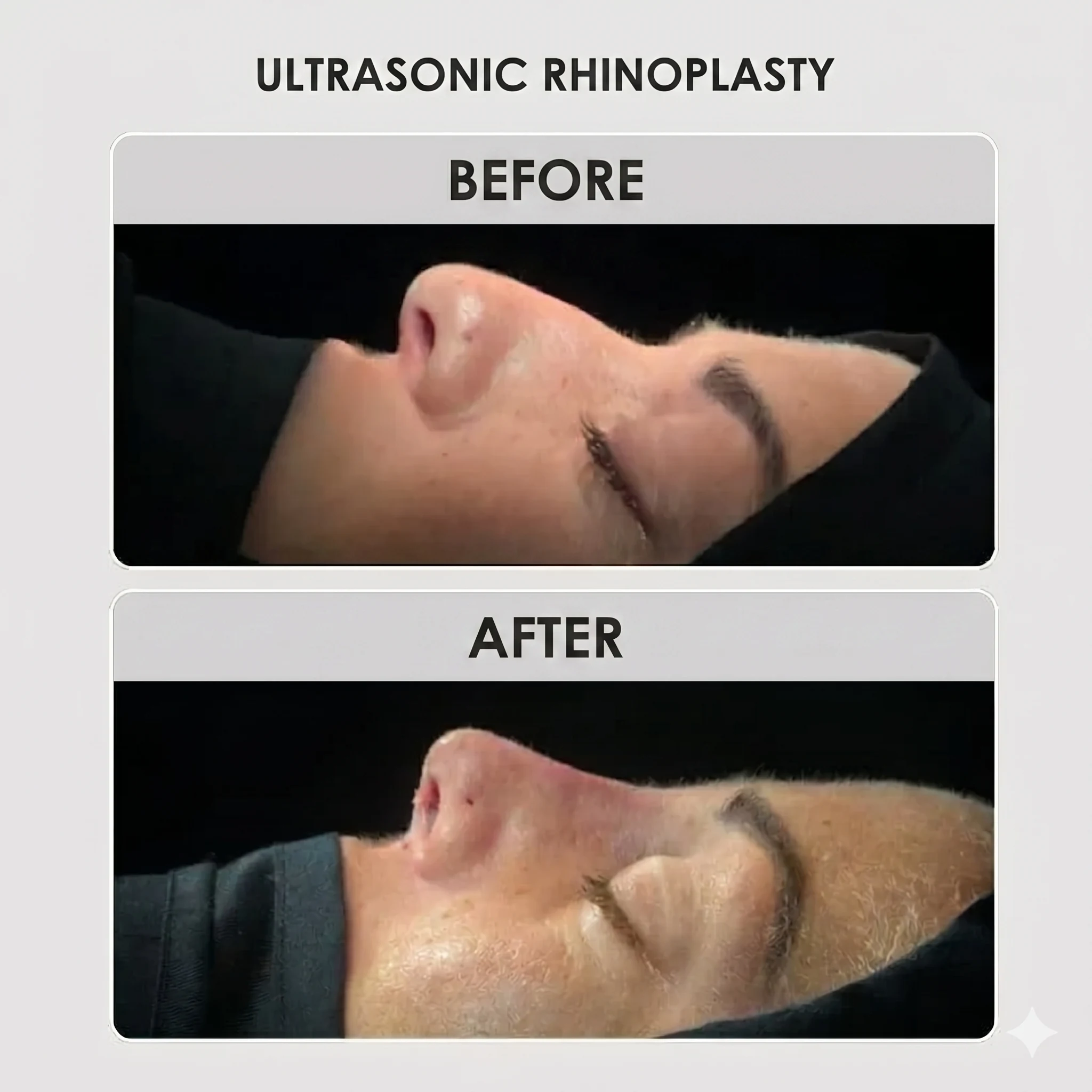
When the surgery requires bone reshaping (dorsum reduction, deviation correction, narrowing), the surgeon can use traditional osteotomes that fracture bone, or a Piezotome device that cuts and reshapes nasal bone with ultrasonic vibration. Ultrasonic rhinoplasty generally produces less bruising and swelling and shortens visible recovery — at the cost of specialized equipment and additional planning time. Not every case requires it; some benefit more from preservation techniques that avoid bone modification altogether.

Preservation rhinoplasty

A recognized clinical approach documented in peer-reviewed surgical literature (Aesthetic Plastic Surgery and other journals) that emphasizes preserving native nasal structures whenever possible rather than rebuilding them. It is not a separately board-certified subspecialty, but it reflects a contemporary surgical philosophy worth asking about.

⚠ Red flag

If a surgeon answers “we’ll decide during surgery” without ever discussing approach options pre-op, that’s not flexibility — it’s lack of planning. Ask which technique is planned for your case, and why. If the surgeon can’t answer, you have your answer about them.

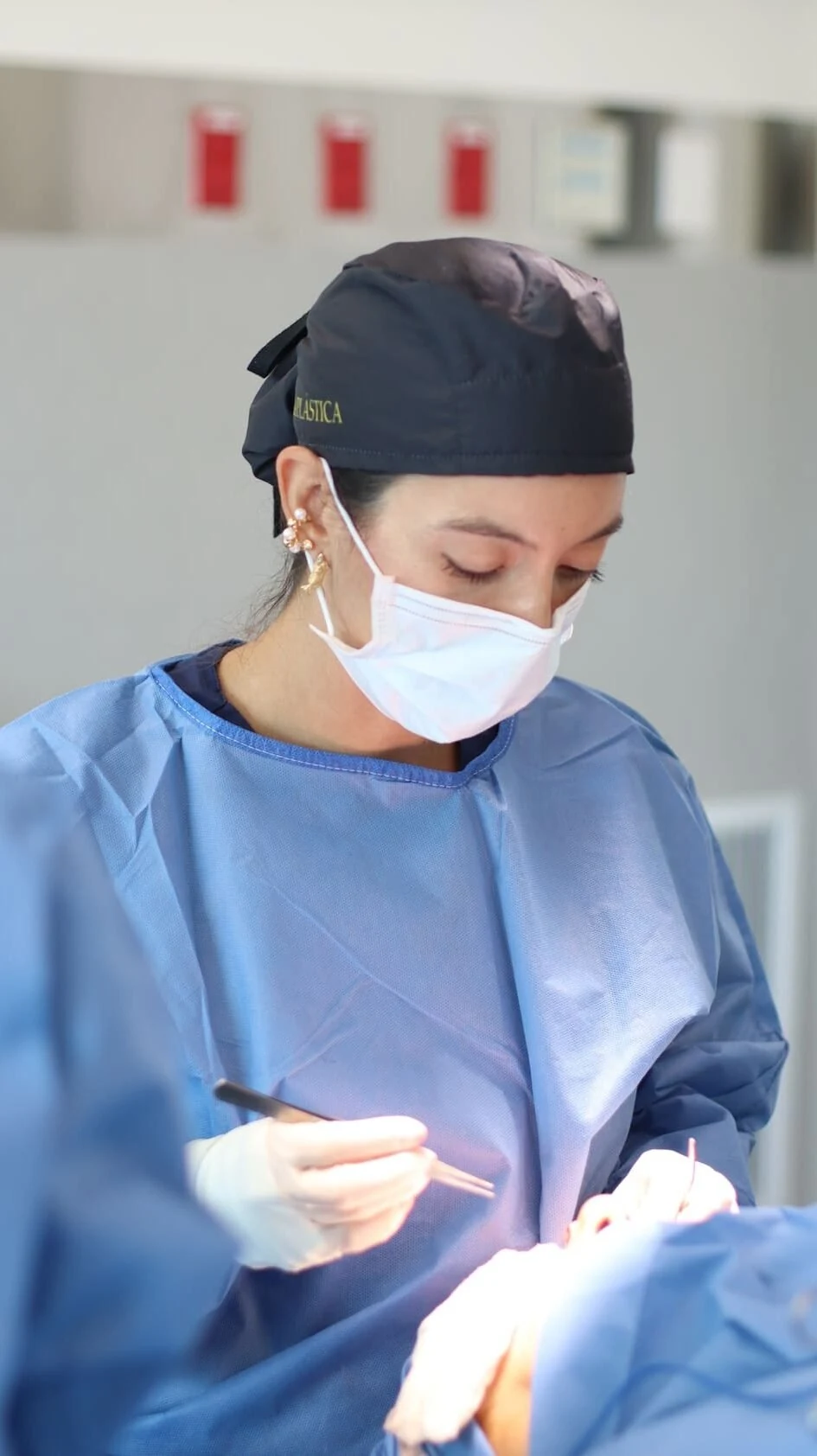
Dr. Daniela Correa performing ultrasonic rhinoplasty at IQ InterQuirófanos, the JCI-accredited plastic surgery facility in Medellín
Dr. Daniela Correa in surgery at IQ InterQuirófanos, Medellín

Where the surgery happens: IQ InterQuirófanos

Dr. Daniela performs surgical procedures at IQ InterQuirófanos, the only clinic in Colombia accredited by Joint Commission International specifically for plastic surgery. Joint Commission International is the same global accreditation body that audits leading US medical centers — accreditation requires meeting hundreds of patient safety, infection control, and clinical quality standards reviewed on-site.

IQ InterQuirófanos has two locations in Medellín's Golden Mile (Torre Medical and Torre Intermédica) with 13 dedicated operating rooms and a patient coordination team that handles international cases in English. International patient services include transportation, lodging assistance, and virtual pre- and post-op support.

For a US patient, the practical translation is this: surgery happens in a facility audited to the same international standard as a top US hospital, in a building designed exclusively for surgical procedures rather than general medical care.

Before/after portfolio depth (what to look for, what to skip)

Before-and-after photos are the most-faked credential on plastic surgery websites. To audit a portfolio properly:

  • Case count visible. Look for a meaningful number of documented cases for the specific procedure you’re considering. A surgeon who has performed many rhinoplasties has a different sample size than one who has performed a handful.
  • Photos that match your facial structure. Ask to see cases with similar bone structure, skin thickness, and ethnic background to yours.
  • Standardized lighting and angles. Look for clinical-standard angles (frontal, lateral, three-quarter, basal) under consistent lighting — pre-op and post-op shot the same way. Retouched promotional photos are worthless for surgical evaluation.
  • Each case clearly attributed to the surgeon. Generic “from our clinic” attribution doesn’t tell you who did the surgery.
  • Consent disclosure. Reputable surgeons disclose that photos are published with patient consent. Absence of this is a yellow flag.

⚠ Red flag

Stock photos passing as patient cases. Photos that look retouched (skin smoothed, color graded). Watermarks from a different clinic. If anything looks off, walk away.

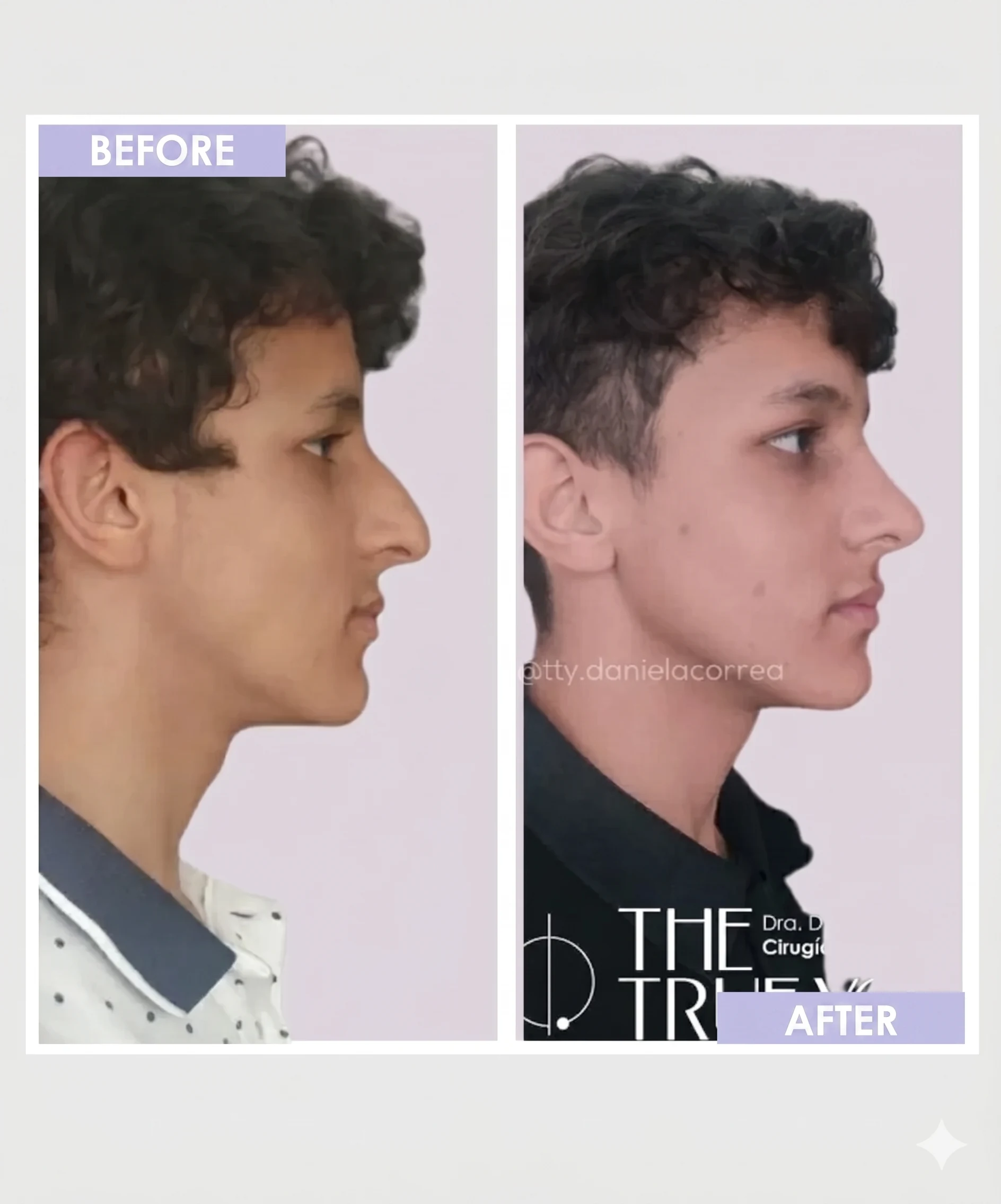
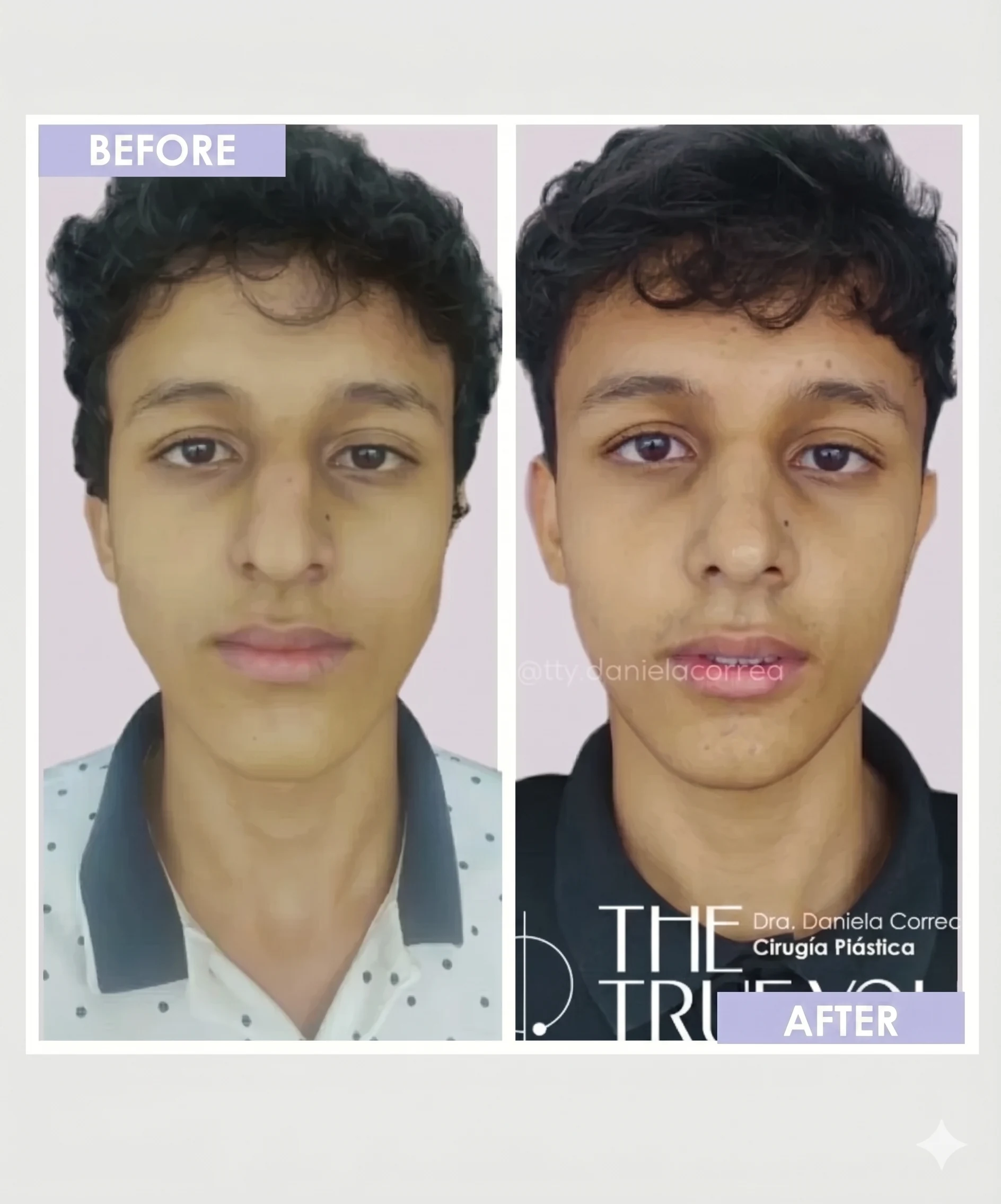
You can review Dr. Daniela Correa’s actual rhinoplasty cases on her rhinoplasty practice page, where each case is labeled with the technique used (Conventional or Ultrasonic · Piezotome) and shown alongside the post-operative time frame.

COMPARE PORTFOLIOS

Send your reference photos — Daniela will pull cases closest to your anatomy

Many consultations stall because the patient’s reference photos don’t match the cases shown on a surgeon’s website. Send Daniela 3–5 reference photos before the call, and she’ll prepare a curated review of cases with similar nasal anatomy and skin type to yours.

Book your virtual consultation — $60 USD →

Curated portfolio · Matched to your anatomy · 45–50 min

The international patient infrastructure

A surgeon in Colombia might be excellent and still not be the right surgeon for you if the patient infrastructure isn’t built for international cases. Five things to confirm:

  • Direct surgeon communication in English. Initial consultation, pre-op questions, and post-op reviews should happen with the surgeon herself — in English, via video call — not with a coordinator translating mid-conversation.
  • Video consultation pre-travel. A 45–50 minute video consultation before you book your flight, where the surgeon reviews your photos, discusses goals, identifies breathing or functional issues, and provides a written line-by-line quote.
  • Written quote breakdown. A line-by-line quote — surgeon’s fee, anesthesia, OR time, facility, medications, surgical insurance, case-specific additions — not just “starting from $X.”
  • Coordinated logistics. Pre-op labs, transport to and from IQ InterQuirófanos, splint and cast care, and post-op review should run through one coordinated team.
  • In-person follow-up plan. If you stay in Medellín 10–14 days post-surgery, you should have at least two in-person follow-ups: cast/splint removal around day 7 and a final review before you fly back.

For the full Colombia rhinoplasty cost breakdown — what’s bundled, what’s billed separately, and how to evaluate quotes from different surgeons — see our 2026 cost guide.

Red flags that should disqualify a surgeon

The American Society of Plastic Surgeons and The Aesthetic Society both publish patient-facing guidelines for plastic surgery abroad. This list combines their guidance with what’s specifically relevant for US patients evaluating Colombian rhinoplasty surgeons.

  • Pressure to commit before consultation. If you’re being rushed to a deposit before a video call, walk away.
  • Quotes without breakdown. “Starting from $4,000” is marketing, not a quote. Anything that doesn’t itemize surgeon fee, anesthesia, OR, and facility is unverifiable.
  • Vague credentials. “Certified” without specifying by whom. “Member” without specifying which society. Every credential should map to a verifiable database.
  • Office-based surgery. Rhinoplasty under general anesthesia in an unaccredited office. An immediate disqualifier.
  • No in-person follow-up plan if you stay 10+ days. Seeing you only once post-surgery is not adequate continuity.
  • Promises (“guaranteed result,” “no risk”). Rhinoplasty has a known revision rate (roughly 5–15% in published literature) and recovery variability. A surgeon who claims otherwise is either inexperienced or dishonest.
  • English communication only through interpreters. Medical nuance gets lost. If the surgeon can’t consult in English directly, find one who can.

For the full ASPS guidance, see their patient resource on medical tourism. For The Aesthetic Society’s guidelines, see their plastic surgery abroad page.

How Dr. Daniela Correa stacks against these criteria

A transparent self-assessment — you can apply the same checklist to any surgeon you’re evaluating.

CriterionDr. Daniela Correa’s statusHow to verify
SCCP full membership✓ YesSearch by name at cirugiaplastica.org.co
ReTHUS registry✓ VerifiableSearch by name at web.sispro.gov.co/THS
Surgery facility✓ IQ InterQuirófanos (JCI-accredited, plastic-surgery-dedicated)Verify JCI on the IQ InterQuirófanos site
Anesthesiologist✓ SCARE-affiliated, ReTHUS-registeredNames disclosed pre-op, verifiable in ReTHUS
Technique disclosure✓ Conventional or Ultrasonic Piezotome, decided in consultation with rationaleDiscussed during the 45–50 min video call
Portfolio depth✓ Cases by technique on the practice pageLabeled per case on the rhinoplasty page
English video consultation✓ Direct, no coordinator translating45–50 minute call, $60 USD
Written quote breakdown✓ Line-by-line within 48 hours post-consultationIncludes all line items
In-person follow-up✓ Cast removal day 7, final review before flight backCoordinated with your travel dates
Coordinated logistics✓ Transport, hotel referrals, post-op careSingle point of contact

If a criterion above ever appears different on this site versus how it’s described elsewhere, escalate it directly with Daniela in your consultation.

READY TO VERIFY EVERY CRITERION

Test Daniela against every red flag in this guide

Bring this guide to your virtual consultation. Daniela will go through each criterion with you on screen — credentials, facility, technique decision, portfolio matching, and the written quote process. If she falls short on any criterion, you’ll know in 45 minutes — and you can walk away.

Book your virtual consultation — $60 USD →

Direct surgeon · No sales reps · Walk away if not satisfied

Frequently asked questions

What if I want to compare 2–3 surgeons in Colombia before deciding?
You should. Most reputable plastic surgeons in Colombia charge a $60 USD consultation fee. Ask each surgeon the same 5–7 questions from this guide (SCCP membership, facility, technique planned for your case, portfolio similar to your anatomy, written quote, follow-up plan) and compare responses side by side. The surgeon whose answers are most specific and verifiable wins, regardless of who’s most-Googled.
How do I verify a surgeon’s SCCP membership independently?
Visit cirugiaplastica.org.co and use the members directory; you can search by name. If a surgeon claims SCCP membership and does not appear, that’s a serious red flag — confirm directly with the SCCP secretariat before proceeding.
How do I verify the ReTHUS registry?
Visit web.sispro.gov.co/THS and search by name and document number. Every licensed Colombian healthcare professional is in ReTHUS — surgeons and anesthesiologists alike.
Is the $60 USD virtual consultation worth it before I travel?
The virtual consultation is where Dr. Daniela reviews your anatomy, asks about your aesthetic and functional goals, identifies any breathing issues, and provides a written quote that breaks down both the surgical package and any additional items your case requires. Book yours →
What’s the difference between SCCP and other “estética” societies in Colombia?
SCCP requires a completed plastic surgery residency from a recognized program plus credentials review. Other Colombian societies with “estética” in the name do not require the same residency standard. They are not interchangeable. Always confirm which specific society a surgeon belongs to, then check that society’s published membership requirements directly.
Should I worry if the surgeon doesn’t speak English and uses an interpreter?
Yes. Medical communication has nuance that gets lost in translation — pain tolerance, expectations about appearance, recovery limitations. For an international patient with no easy way to come back for clarification, direct English-language communication with the surgeon should be a hard requirement, not a nice-to-have.

References

  1. Sociedad Colombiana de Cirugía Plástica Estética y Reconstructiva (SCCP). Membership requirements. cirugiaplastica.org.co/como-ser-un-miembro-de-la-sccp. Consulted 2026-05-25.
  2. American Society of Plastic Surgeons. Medical tourism: what you need to know about traveling for plastic surgery. plasticsurgery.org.
  3. The Aesthetic Society. Plastic surgery abroad — patient safety guidelines. theaestheticsociety.org.
  4. IQ InterQuirófanos. JCI-accredited plastic surgery facility, Medellín, Colombia. iqinterquirofanos.com/en/about-us.
  5. ReTHUS — Registro Único Nacional del Talento Humano en Salud. Ministerio de Salud, Colombia. web.sispro.gov.co/THS.
  6. SCARE — Sociedad Colombiana de Anestesiología y Reanimación. scare.org.co.
  7. CDC Yellow Book. Medical tourism — health considerations for travelers. cdc.gov/yellow-book.

YOUR SURGEON

About Dr. Daniela Correa — built for international patients

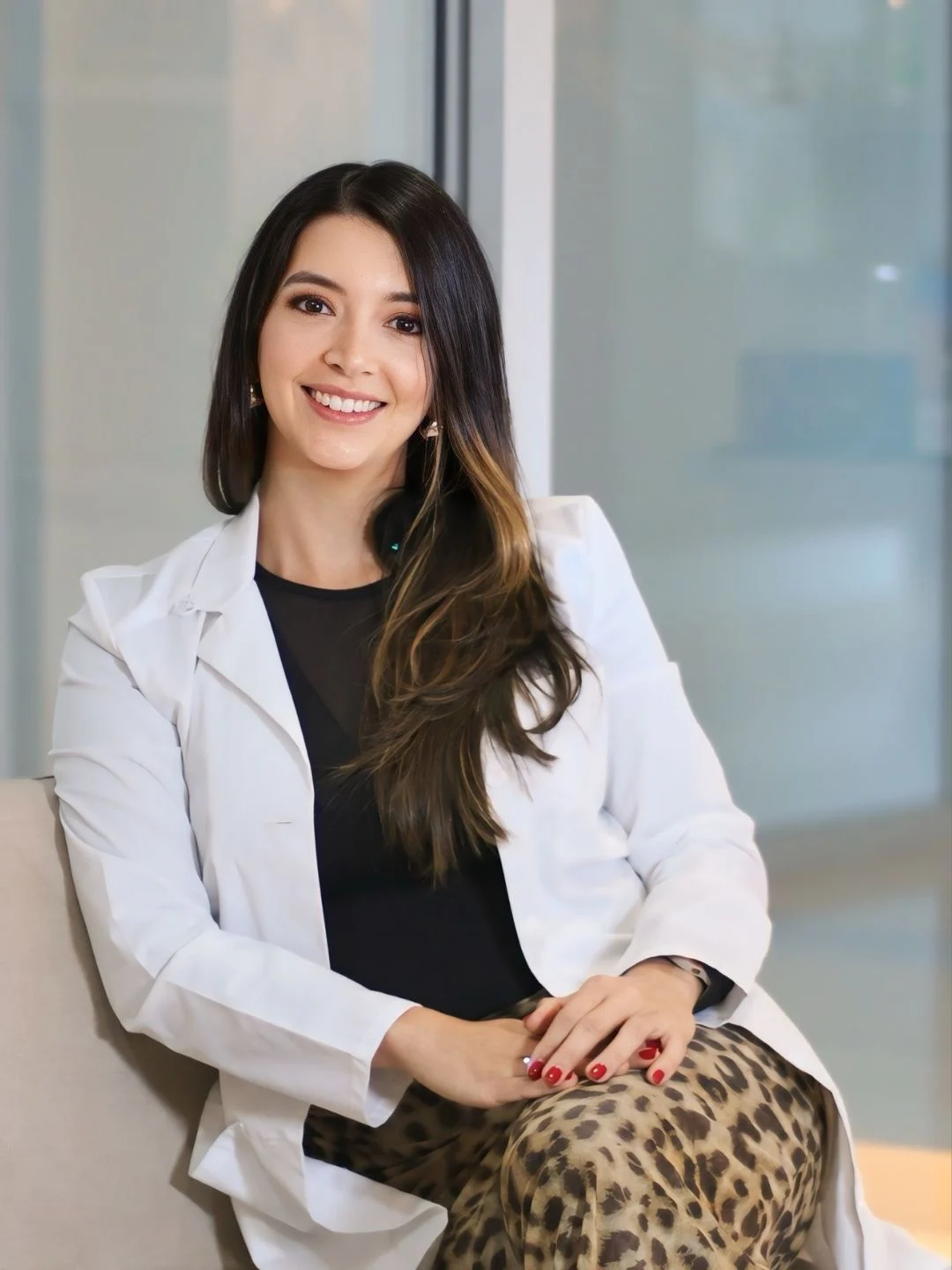
Dr. Daniela Correa, plastic surgeon practicing in Medellín and Rionegro, Colombia — portrait

For a US patient considering rhinoplasty in Colombia, the relationship with the surgeon matters as much as the technique. Dr. Daniela Correa is a plastic surgeon (member of the Sociedad Colombiana de Cirugía Plástica) practicing in Medellín and Rionegro. What makes her practice work for international patients is structural, not aspirational:

  • Direct communication in English. Initial consultation, pre-op questions, and post-op reviews happen with Daniela herself — via video call, in English, not through a coordinator translating for her.
  • Single point of contact. Pre-operative labs, surgical scheduling, transportation to IQ InterQuirófanos, splint and cast care, and the first post-op review all run through one coordinated team — you don't get handed off between four different offices.
  • JCI-accredited facility. Surgery happens at IQ InterQuirófanos, the only Joint Commission International-accredited plastic surgery clinic in Colombia — the same accreditation standard applied to leading US hospitals.
  • Focused practice. Daniela performs a limited number of surgeries per week. Each case is reviewed individually — not slotted into an assembly-line schedule built for volume.

Read Dr. Daniela's full profile — credentials, training, and approach in detail.

Meet Dr. Daniela Correa — a short introduction.

Ready to vet a surgeon properly?

The fastest way to know whether Dr. Daniela is the right surgeon for your rhinoplasty is to apply this exact checklist during a 45–50 minute virtual consultation. Credentials on screen, technique discussed, portfolio matched to your reference photos, and a line-by-line written quote within 48 hours.

SCCP member · IQ InterQuirófanos · 45–50 min call · English

PREFER TO WRITE INSTEAD?

Send a message to Dr. Daniela’s team

Not ready to chat on WhatsApp? Leave your details and a short note about what you’re considering. Daniela’s international-patient team will reply by email, usually within one business day.


Dra. Daniela Correa Escríbeme
Dra. Daniela Correa

Dra. Daniela Correa

Cirujana Plástica

¿Tienes dudas o preguntas?
¡Escríbeme ahora!

Por favor ingresa tu nombre
Por favor ingresa un correo válido
Por favor ingresa código de país válido (+57) y teléfono
Powered by Amedik SAS
WhatsApp Icon

¡Escríbenos!

¡Escríbenos!

x


Creado por Forja